
Which is the superior study method—cramming everything in one week or less, or planned-ahead reviews?
by Trần Thy Vân
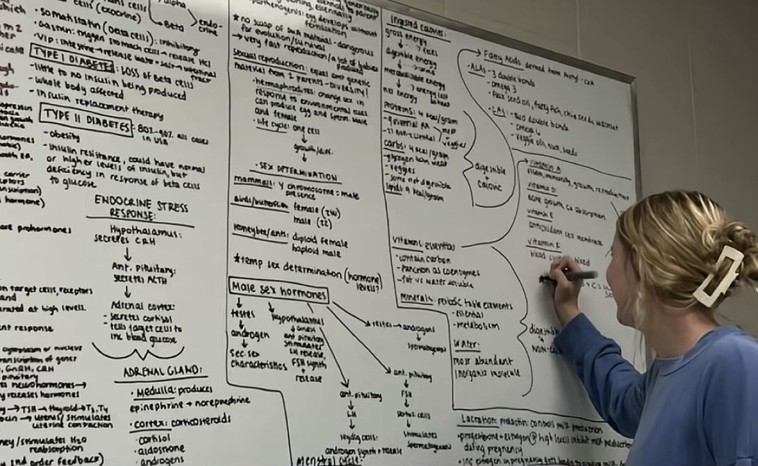
Credits: Pinterest
Have you ever created an exam revision plan—only to forget about it and cram everything at the last minute instead? During exam weeks, everyone is stressing more and sleeping less. You would see people panicking to review and students who radiate confidence. In the end, both ace their exams flawlessly. This paradox leaves us to ponder: is cramming or actually sticking to a study plan the more effective way to review?
As normal human beings, none of us are strangers to cramming—the short but intense, stressful study periods that happen moments before an important exam takes place. For most people, it goes something like this: late nights, mountains of material, and caffeine jitters. Students usually resort to this "method" due to procrastination, lack of motivation, or because they have too much to handle at once. Universities recognize cramming as a habit that teaches pupils to maximize minimized time. According to crammybrain.com, benefits of cramming include time efficiency and improved short-term memory. However, some common downsides present in sample groups were cognitive overload, compromised understanding of materials and increased stress. Pre-planned reviews: Pre-planned reviews are also a popular revision method amongst students, but what is the main difference? In contrast, pre-planned reviews give students a more organized and structured approach to exam revision. While cramming provides immediate, brief advantages, scheduled revisions are more effective for long-term understanding and foster healthy, consistent study patterns. For instance, Yale scientists recommend the Pomodoro method and using study tools such as Khan Academy. However, a commonly recorded mistake with pre-planned reviews is that they’re not created to be flexible and realistic enough. Students tend to schedule fixed, crowded timelines—which can cause them to fall behind, feel tired and drained, and lose motivation in studying altogether.
Students understand how stressful, exciting, and exhausting exam revisions can be the most. Hence, let's have a peek into Wellspring’s classrooms—to discover which study method takes the throne! Joe, 7.5, said, "Before exams, I cram everything. It usually works because I remember all the information I've learned. However, I'd prefer planning if I had the time." In contrast, Nathan, 11.4, stated, "I plan one day for each subject, and I use study group chat quizzes. I also use textbooks and other materials. It's beneficial most of the time because I understand the lesson easier, and I can ask for help from my friends." Moreover, if you are looking to try either method in your next exam revision, below are some tips from "experienced" students: Nguyễn Christine, 8.1, advises, "You should reread stuff from your notes and take breaks often. You should also plan and cram at the same time if necessary during urgent times." Another piece of advice from Tran, 11.6, is "Don't drink coffee, take breaks to calm your mind, and try to have fun. Do exercises or revisions until you can solve them effortlessly without mistakes." As an excellent student of 4 years, I prefer planning my review sessions beforehand. My personal favorite method that I apply is the "blurting" technique—where you read through materials, set them aside as you write everything you remember down, and go back to check for mistakes afterwards. This way, not only can I retain information longer and spot weak topics, but it's also useful for cramming—since it utilizes active recall.
To answer our big question, there is no "superior" study method—it depends on each student’s learning style and needs. Cramming is suitable for short-term needs like next-day, short exams. Meanwhile, pre-planned revisions are encouraged to understand deeper, more complex topics, or if you aim to remember more and stress less. Best of luck in your upcoming midterms and finals, WISers!
