
Being Distracted Can Actually Help You Perform Better
by Nguyễn Xuân An Khôi
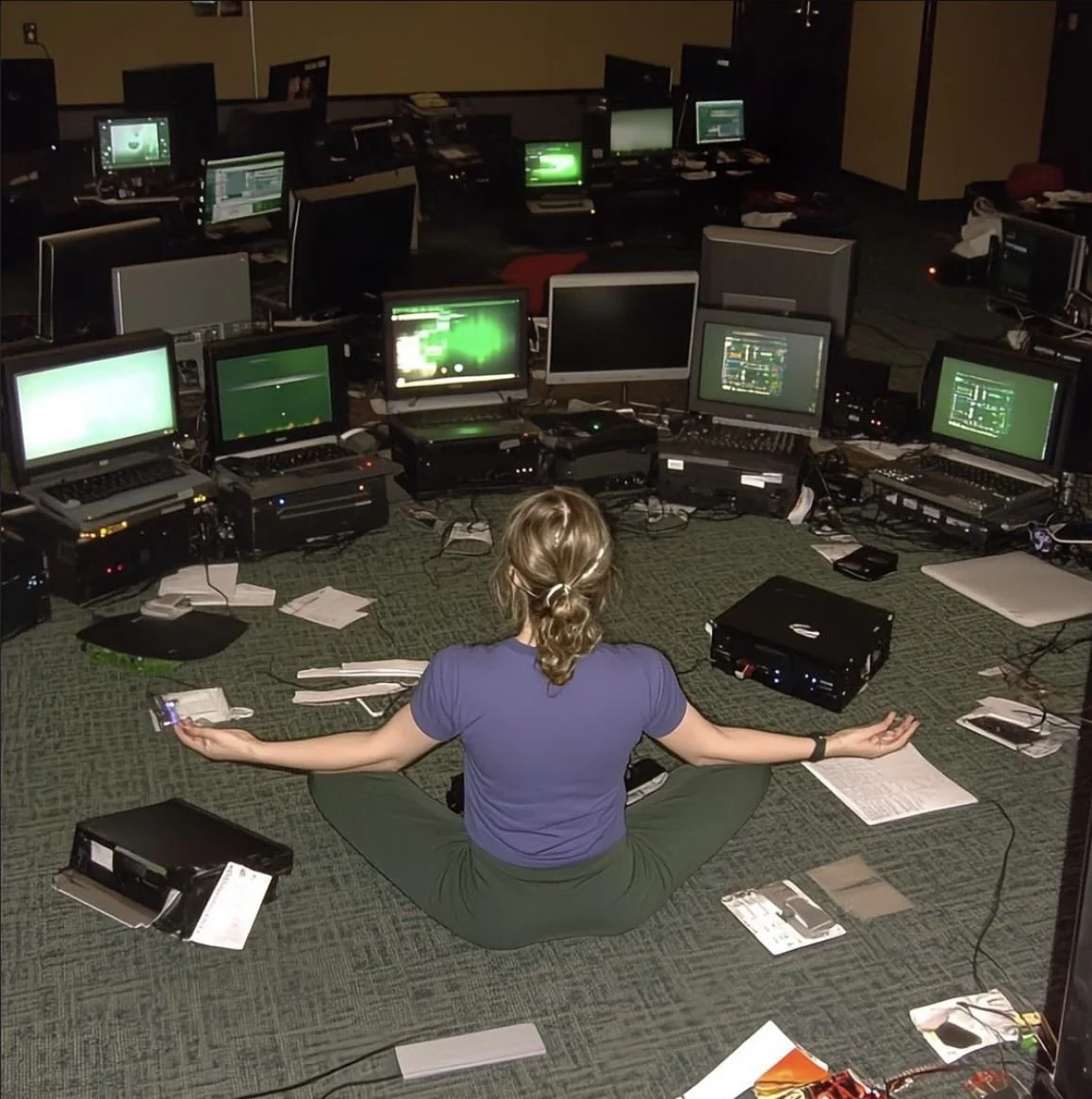
Credits: Pinterest
We've all been there, trying to stay alive on a cup of coffee in the middle of the night, cramming for the final the night before the big test. In fact, you might be one of the 69.7% of students who reported that they cram before exams. In fact, 38.1% say they "frequently" wait until just before an exam to study, and another 5.8% say they "always" do so (International Neuropsychiatric Disease Journal, 2024). While these activities require intense focus, new science suggests that reducing overall focus capacity actually improves overall productivity.
That sounds contradictory?
On the surface, we assumed that the relationship between our level of focus and productivity was positive. If one goes up, the other must go up as well. But a growing number of researchers have suggested that intentionally reducing our focus capacity can actually improve performance compared to baseline. They enabled the mind to clear up cached memory built up for the day, which helps improve clarity and cognitive functionality across the board.
Think of your brain like a web browser with 30 tabs open after a long work session; not all of them are necessary. Each tab consumes memory, using up precious resources. A strategic break, like closing unnecessary tabs, would result in a better-performing computer—or a better-performing brain.
Just Trust Me, bro
A 2019 study on patients with ADHD, post-stroke survivors, and individuals with reduced frontal lobe activity— these individuals have reduced ability to concentrate— are able to outperform people with healthy brains on certain problems. Researchers explain that this phenomenon can be easily replicated using what is called an "incubation effect", where, when you step away from a difficult problem—stop focusing on it entirely—you are more likely to solve it than if you had ground away without a break.
The story of mathematician Henri Poincaré perfectly illustrates the effectiveness of this exact phenomenon in the early 1900s. After weeks of struggling with a complex mathematical problem, he had had enough and took a stroll to a bus stop. The moment his foot touched the bus's step, the solution arrived "suddenly and with brevity," (Henri Poincaré) fully formed. He wasn't thinking about the problem. That was precisely why it was solved.
You Don't Have to Be Henri Poincaré
The good news is that you can even apply this method for your next cramming session— you don't need a bus ride or a math breakthrough to use this. The incubation effect works for any difficult problem: an essay due in 30 minutes, a chemistry equation, or a Shakespeare poem analysis.
All you need is a strategic unfocused break. Five to ten minutes of something unrelated and aimless. Go do something else that doesn't require heavy thinking. Anything that you won't feel like you're working harder, like doom scrolling on TikTok. And trust the science that once you come back later, your brain will work twice as fast.
